%201.png)

The proverbial pendulum has a way of swinging towards one extreme and then back to the other as time passes. Currently, a case for training exclusively in one rep range (e.g., ~5-9) has been making its rounds on social media. As this trend is growing in popularity, I realized that I never made a formal post about my contest prep experience in 2023 (though some have, and I’ve spoken about it in depth on Borge Fagerli’s podcast).
For context, let’s start with how this trend came to be…
Fatigue mechanisms have been the industry’s hot topic over the past few years. As we gain a better understanding of how physiology works and its potential training implications, several theories have emerged with regards to program optimization. Among them, the ‘ideal rep range’ has probably received the most attention and stems from acute research showing that higher rep sets generate more post-workout fatigue than lower rep sets. While the majority of bodybuilders train through a variety of rep ranges, some have questioned the utility of doing so. Chronic data suggests that there is a comparable hypertrophic response across a variety of rep ranges so long as each set is performed with a sufficient amount of effort (i.e., to muscular failure or at least to a sufficient proximity). These two data points often get layered together by many science communicators in discussion to arrive at the conclusion that most, if not all working sets should be performed in lower repetition ranges to mitigate unnecessary fatigue.
At face value, this seems like a sound rationale. Unfortunately it requires a leap in logic that we can’t make (yet). While we may see greater decreases in performance following a higher rep set to failure compared to a lower rep set to failure, we can’t make the same assertions beyond the context in which these studies were performed. We cannot say the same applies to multiple sets, nor can we say one example creates more fatigue from session to session (or, at least a practically meaningful amount of fatigue that would warrant programming alterations over the course of several weeks/months).
To put it simply, while it may be true that one form of training produces a more significant physiological effect in an acute time frame, the primary question we should be asking is whether or not this difference is significant enough to influence outcomes. When examining the evidence, consider whether or not a study has a “time effect.” This indicates that both/all conditions elicited a positive response (as in, they both grew at least some amount of muscle from pre- to post-testing). Regardless of any differences between conditions, that tells us that both methods were effective in producing results.
If the fatigue generated from higher rep sets was so much greater, we would certainly see a difference in results across RCTs and at the meta-analytic level, but we don’t. In fact, there’s chronic data showing (very) lower rep conditions requiring more sets be performed to provide an equivalent stimulus (albeit a tangential topic for another discussion).
Regardless of how you interpret the data, this is nowhere near as concrete as it’s being touted.
A Case For Variation
If you consider the variety of possible training adaptations, most of them see greater long(er) term outcomes from the inclusion of strategic and appropriate variation. It’s important to understand that our physiology doesn’t operate in isolation. For most processes, there are several steps in a chain of events that eventually yield the desired result. Most athletes intuitively understand this – strength and power athletes aiming to lift as much weight as possible on their comp lift don’t exclusively train with 1RM attempts, they move through a specificity continuum (different loads/rep ranges, exercise derivatives, etc.). Marathon runners don’t exclusively run marathons to improve their time, they cycle through a variety of durations and intensities (or pacing) in order to address their individual needs.
For the sake of this discussion, it’s important to consider how something like “maximal strength” is actually the culmination of several adaptations across several physiological systems, it’s not just “strength”. Strength can improve for a variety of reasons, and there’s likely some rate limiter that dictates your current capabilities. This is one of the primary reasons behind why strength athletes may perform lower intensity “volume blocks” and/or perform a taper to peak for competition – they’re moving across the specificity continuum to ensure all systems are up to date. In simplest terms, there is an assumption that varying load intensities will have a different effect on the body (and some of these may be beneficial, even if it’s just indirectly).
Now, hypertrophy is often viewed as the most forgiving training adaptation, thus requiring only a low degree of specificity. However, there may be a sound rationale for implementing periods of training within higher or lower rep ranges for the unique indirect benefits they provide. At any point in time, we need to know that the target muscle is the limiting factor in our training and not some other system (a sufficient number of contractions at a close proximity to failure is the specific stimulus we’re after at the end of the day). In a practical sense, if you find that you have a poor aerobic base, there’s a chance that force production capabilities may be reduced simply because you’re inefficient at buffering metabolic byproducts. If you find that the age-old “anything above 8 reps is cardio” powerlifting meme accurately describes your training experience, this may interest you.
Conceptually, we know that mitochondrial and capillary function can influence how well someone responds to training, and may have the potential to become a bottleneck in optimizing adaptation.
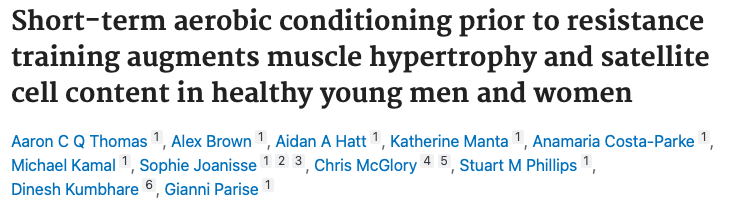
This 2022 publication by Thomas and colleagues tested the effects of implementing a 6-week period of aerobic training prior to a 10-week period of resistance training and hypothesized that the phase of aerobic training would later augment adaptations from resistance exercise. To briefly summarize their methods, the aerobic condition consisted of moderate intensity cycling for 45 minutes, done 3x/week for 6 weeks. The following 10 weeks of resistance training primarily focused on Quads (the exercises were: back squat, leg press, leg extension, hamstring curl, and calf raises, all 3 sets each for 10-12 reps), 3x/week. Fortunately, they were able to differentiate between how type I and type II muscle fibers responded (if you’re curious about how, the full text is open access). Post-intervention, they observed an increase in type II cross-sectional area in both conditions, but the condition that included aerobic training prior to weight training saw increases in type I, type II, and mixed-fiber cross-sectional area. This doesn’t necessarily prove anything regarding rep ranges or load variation, but it does present the idea that other forms of training, or the emergent adaptation from said modality may influence how well someone can grow muscle.
The same may apply on the other end of the load spectrum at lower rep ranges where the process of motor unit recruitment and rate coding may be slowing things down (in simple terms, the hardware may be capable, but the software needs an upgrade). If your 5RM and 10RM are fairly similar, this may also be problematic (speculating here, but you get the idea).
We do have some direct evidence that suggests a quick cycle of low-rep “strength work” prior to a moderate-rep “hypertrophy phase” may be beneficial.
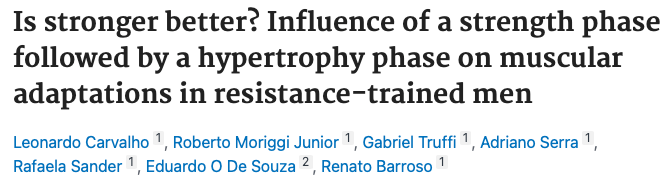
In an 8 week trial, Carvalho, et al. (2020) randomized subjects into one of two conditions. The experimental condition dedicated the first 3 weeks to “strength” work (i.e., sets with a 1-3RM load) followed by 5 weeks of “hypertrophy” training (i.e., 8-12RM loads) while the control group trained with 8-12RM loads for 8 weeks.The group that incorporated a low rep phase actually achieved greater hypertrophy and strength. The authors concluded that there may have been a potentiation effect and that the neurological adaptations achieved in the first phase allowed the subjects to use more weight in their moderate rep range work. Perhaps the deliberate change addressed a supporting system or process that may have limited their ability to maximize the following phase.
It’s worth noting that “potentiation” implies that the specific sequence of changes was causing the effect. For this subject pool, that’s probably the case, but it may not be in all cases. Other data suggest some trainees may simply respond better to training with heavier or lighter loads:
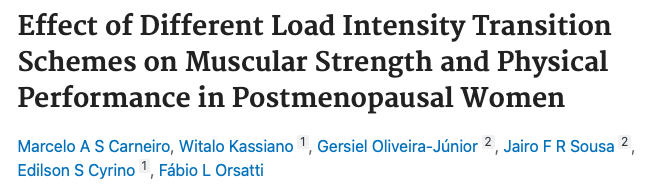
A recent publication, Carneiro, et al. (2023), compared the effects of training with 8-12RM loads to 27-31RM loads, then tested the effects of flipping the groups midway though. In comparison to the average study length, this one was a fair bit longer fortunately, lasting 24 weeks in total. Subjects were assigned to either the “heavy load (HL)” condition or the “light load (LL)” condition. Through the first 12 weeks of the study, they trained in their assigned rep ranges 3x/week, then switched conditions for another 12 weeks. After the first 12 weeks, the data showed a natural bell curve response like we’re accustomed to seeing in many other publications (demonstrating that there were low responders, moderate responders, and high responders within the same condition … or a variation in responses). Following the second phase, the data displayed a big reduction in low/non responders (only one subject didn’t see a positive change from pre to post). Interestingly, there was not a clear observable pattern in the data (i.e., consistently switching from HL to LL producing more growth, or vice versa), the only pattern we see is that the change in rep ranges/load used disrupted the trend in responses. For example, we can see the % change speed up in the second phase for both scenarios (going from HL to LL as well as going from LL to HL) across various subjects. We also see a scenario where some initial high responders see their progress slow as a result of changing conditions. The change occurring over this sort of timeline seems to contradict the law of diminishing returns (or, simply the change in rep ranges was enough variation to combat it). Obviously the sampled population is a significant limitation within the context of this discussion, but it’s still data worth considering in my opinion.
As more information comes out, it seems like it opens the door for more questions. Personally, I think our understanding of cellular physiology is far from complete. At one point, “cardio kills your gains” due to the interference effect was a commonly held belief due to limited mechanistic understanding (mTOR, AMPK, etc.), now we understand it may be helpful in moderation. Things may not be as simple as “just turning on MPS”, and other cellular functions may have important roles in the adaptation process, so it presents somewhat of a case for addressing any potential bottlenecks within the chain of events. This is all still extremely speculative on my part (even with some degree of evidence/support, I’m not going to pretend any of this is groundbreaking or definitive).
A single study is only one piece of the puzzle and shouldn’t necessarily cause you to shift your entire training program nor dictate practice - it’s best to wait for a larger grouping of data to show a similar trend before making any conclusions. Though, I think the idea of completely excluding a rep range needs to be reevaluated at the very least.
Anecdotal Experiences
Over the years, there have been periods of time where training leaned a bit too far towards one end or the other (I think every one of us can look back at things we were once doing in the gym and cringe…and if you currently can’t, you will eventually).
Admittedly, I ran with the idea of exclusively lower rep training. I liked moving a ton of weight and was always far more excited for those heavy 5’s and 6’s than those 12’s. Leading up to my 2023 contest prep, there was ~10 months where my training didn’t exceed 7-8 reps, and this eventually resulted in a very deflated (almost appearing atrophied) look:
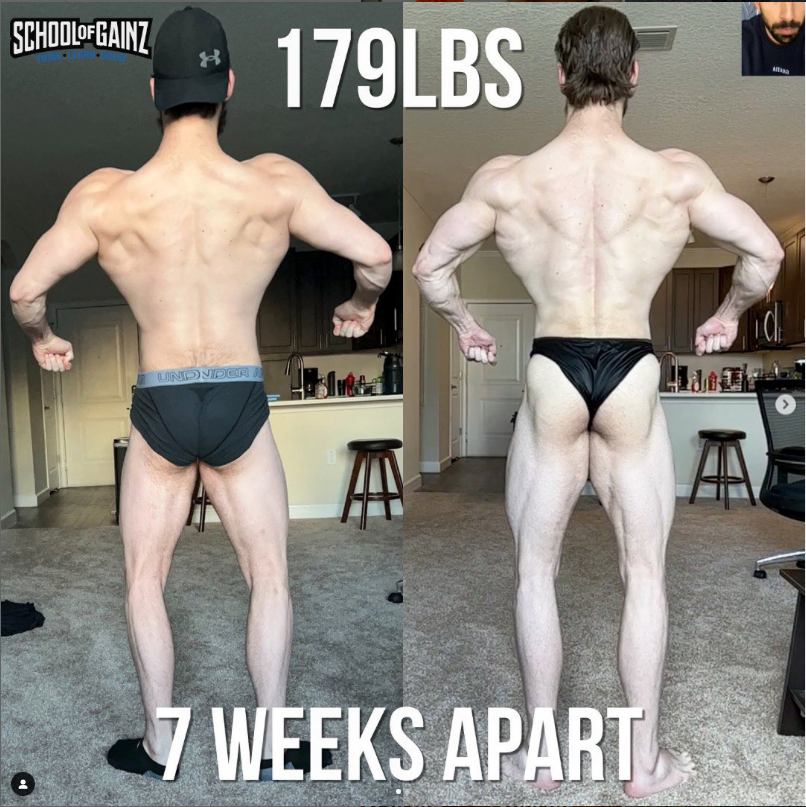
That (left) picture was taken around mid-way through the prep diet where I hit my previous stage weight on the scale, but still visually looking like I had ~15 lbs of fat mass to lose! Unfortunately, I wasn’t in the habit of taking consistent progress pictures (same lighting, same conditions, etc) throughout my offseason, so I wasn’t able to catch it per se until my scale weight didn’t align with what I was seeing in photos (another correction made this offseason). My training log was progressing most weeks, and I was following a nutritional plan to the gram, so I assumed everything was going to be fine once I leaned out.
As we continued to diet down, scale weight kept coming off, but we still weren’t seeing the visual improvements we’ve seen in previous preps. Hovering around my previous stage weight, I knew something was seriously wrong given those check-in pictures.
Needless to say, big changes were in store.
Essentially, the goal was to start training like a bodybuilder again. Rep ranges were brought up on every single exercise with the exception of the first set of each session’s first compound and some intensity techniques (i.e., drop sets) were employed on select movements towards the end of the session. As you can imagine, the first week was pretty rough - my work capacity was so low which made every session challenging to get through. We threw in some 20-30 rep work on a leg press on that first lower body day with a double drop set which resulted in the most painful amount of swelling in my quads. It was so bad that it was stopping the set early. Fortunately after a couple of weeks, the repeated bout effect finally kicked in and things started to get easier. The rest of the prep, my higher rep sets continued progressing fairly quickly (which may just be attributed to a learning effect, RBE, etc.) and my ability to maintain higher performance through drop sets improved substantially. Interestingly, my lower rep sets started to progress again too. I can’t say for certain that the higher rep work or intensifiers directly contributed to that, but this was the only change made to our protocol, so it’s worth noting this outcome.
The picture on the right side was the end product after 7 weeks of training with those modifications. Nutritionally, that entire time was spent at PSMF numbers (protein sparring modified fast) with a periodic refeed to keep performance high, so this clearly wasn’t just a difference of being flat versus full.
When we first posted this transformation, I think the general assumption was that this came after a detraining period or a complete hiatus from training. I was, in fact, training consistently with maximum effort and seeing progressions the whole time - every session was tracked with most top sets recorded and posted on social media.
So what happened to my body composition? I’ve spent a lot of time thinking about what could’ve happened over those 7 weeks physiologically and an even greater amount of time trying to figure out how I found myself in the predicament in the first place. Up until that point, I nearly forgot what a pump felt like, so my initial thought was that the higher rep work must be causing a significant amount of swelling/inflammation, but there’s clearly no edema in my physique on the right. Another thought was that the higher rep work was long enough in duration to demand greater amounts of glycogen to be used and stored, which may have had some contribution…but again, this is clearly a difference in muscle tissue. Physiologically speaking, I have to think that training progressions would have eventually come to a halt if I was actually losing muscle in the months prior to the picture on the left. Even in a scenario where contractile tissue was only maintained, neurological changes would have only taken me so far. That being said, I still have a lot of questions that I’m continuing to explore.
Was some other physiological process creating a bottleneck in adaptation? I’m not entirely sure, but it was clear something needed to be addressed with how that first week of training went post-adjustment. Could the novelty of training adjustments cause this sort of change? I’m not going to pretend to have a definitive answer here - I could see a scenario where prior training history may influence where you will respond best in future phases, but we just don’t have these answers.
I’ve gone through old training logs trying to sort out how my training got so far down the intensity/low volume/mentzer-esc side of things and it took me all the way back to late summer of 2020. At the time, training volume research was the latest craze and many of us were training with an absurdly high amount of weekly sets - starting mesocycles with lower volumes and ramping it up to as much (or more) than you could recover from, deload and repeat. There was a period where three mesocycles had gone by where my strength didn’t move much on any of my main compound lifts. Regardless of your training age, the log book is probably telling you something if nothing has changed over ~12-16 weeks.
That next mesocycle, I opted to keep set volume on the lower end (for those who were following this volume ramping approach, it was common to break things up with a low volume phase). While volume came down, it was important to keep intensity/proximity to failure on the higher end. Early on in this phase, I recall pouring through the literature as much as I could because I was so disappointed in the lack of progress (thinking I had every variable optimized and had been following a plan that was accurately rooted in the evidence). Coincidentally, I had this realization about training to failure in that a majority of these volume studies required the subjects to train to failure on most, if not all sets for every single session/for the entire duration. Naturally, I wanted to see how long I could last taking everything to 0 RIR or to concentric failure (and while volume was deliberately lower, I figured now would be the time to try it). I ended up lasting ~18 weeks before needing a deload, which was way longer than any previous block. Throughout that time, my moderate rep strength took off (see picture below for time comparisons).
8/4/20 > 11/18/20

When that phase finally came to an end, I opted to continue training that way since my progress was so substantial. At that point in time, it felt like the way to train and that something had to have been wrong with higher volume training. It was very evident visually that muscle had also been built in that time frame, but I would also assume some sort of taper/peaking effect was happening simultaneously in that my nervous system was just becoming much more efficient at putting the muscle to use.
In my opinion, the most interesting part of all of this was how well the initial switch worked, only for it (in principle) to become the problem after enough time had passed. From ~mid to late 2020 through ~mid 2023, I would make a small reduction in volume if a plateau lasted long enough (and for the most part, it facilitated strength progression…accomplishing what it initially did, but to a lesser degree). When looking back at that 2023 transformation, it was clear this concept could be and was taken too far… and the solution? Moving in the opposite direction, back towards higher volumes.
Actionable Steps to Take From Here
How do we implement this in practice?
A phasic approach? DUP? Cycle through rep ranges intra-session?
Like everything else in this game, we probably have more than one viable option. Personally, I think it’s important to have at least a maintenance dosage of work done outside of your meat and potatoes rep range so that you don’t run into any serious issues.
Below are a variety of potential avenues you could take at different time scales:
Within the session:
- Sets of 6–8
- Sets of 12–15 (with shorter rest intervals)
- Sets of ~20+ to finish
Undulation throughout the week:
- “Heavy” day (sets of 5–8)
- “Light” day (sets of 12–15+)
“Block” sequencing/phasic structure:
- PHASE I – block of high volume training + aerobic work (possibly use shorter rest)
- PHASE II – block of normal/heavier “hypertrophy” meat and potatoes work/maximize tension/etc.
- PHASE III – (short) block of neurological-based training (potentially allowing for the use of greater loads next time through)
As with most things, I would suggest trialing each (or some combination of the above) and moving forward with what works best for you. I suggest you look to address any potential bottleneck and train what’s limiting first. Ultimately, this should be intended to address your specific needs, and not necessarily introduce arbitrary changes.
It may not be super obvious where to start, but performance patterns may indicate the ideal direction to take.
Here are some examples:
Example 1
- Great low rep performance–big difference between 1RM, 5RM, 10RM loads (“anything above 8 reps is cardio”)
- Potential adjustment:
- Increase program’s average rep range
- Keep maintenance dosage of low rep work to keep prior adaptations
- Improve ability to maintain output for longer durations
- Improve ability to maintain a larger % of 1st set performance across multiple sets
- *Work with higher volumes/more RIR (NOT because more is better, but to create variation/address bottlenecks)
Example 2
- Great moderate/high rep performance–5RM and 10RM not very different, anything sub 7 reps feels like you’re moving mountains.
- Potential adjustment:
- “Intensification” (essentially the opposite of ex 1’s “accumulation”)
- Reduce program’s average rep range–generate needed neurological adaptations
- Create larger gap between 5 & 10RM loads (just as confirmation adaptation is occurring)
- *Reduce volumes/less RIR (again, to induce variation, not because this is better)
Final Thoughts
Again, most of this is completely speculative on my part.
With the data still being so sparse, it’s important not to jump straight to conclusions and suggest everyone needs to sequence their training like this.
Anecdotally however, I’ve seen enough to know that there’s utility in incorporating a variety of rep ranges at least for the indirect benefits and adaptations they provide.
As a general rule of thumb: the closer you stand to the “middle ground” with regards to contested topics, the better your long term outcomes will be.
